A DWH is not just a data storage system, but a strategic asset that accelerates decision-making, improves analytical accuracy, and unlocks new growth opportunities. Enterprise data warehouses allow you to consolidate fragmented data into a unified platform, ensuring business flexibility and scalability.
The foundation for scaling your business
Enterprise Data Warehouses (DWH)
dwh


Eng
With the powerful analytical capabilities of a DWH, your business can:

Make forecasts and analyze trends based on real data

Reduce the time spent on data processing and decision-making

Enable visualization of key performance indicators (KPI)
With Aspex, you get a DWH that provides your business with speed, high data quality, and long-term stability.
BENEFITS OF DWH IMPLEMENTATION WITH ASPEX
Error-free data quality
• Accurate and timely information is the key to successful analytics. We ensure that all data is cleaned and processed without errors, eliminating duplicates and data quality issues, which is especially important for reporting.
Long-term stability and scalability
• Our solutions are built with a long-term perspective in mind.
• The implemented DWH scales easily and will support your business at every stage of its growth, adapting to new tasks.
• The implemented DWH scales easily and will support your business at every stage of its growth, adapting to new tasks.
Speed of implementation and integration
• Thanks to our deep industry expertise and ready-made solutions (ETL processes, KPIs, connectors), we ensure fast data integration from various sources.
• You will be able to start using the DWH quickly regardless of data volume — whether it is 1 TB or 100 TB.
• You will be able to start using the DWH quickly regardless of data volume — whether it is 1 TB or 100 TB.

We support data collection from a wide range of sources — from standard Excel spreadsheets and CRM systems to specialized industry platforms and analytics tools.
Service layer
preparation of data for reporting and analytics
Data marts
central repository of standardized data
Core
data loading and initial processing
Staging
data access for business applications
We implement data warehouses based on the multi-layer LSA (Layered Scalable Architecture).
MULTI-LEVEL STRUCTURE FOR
A SCALABLE AND FLEXIBLE
DATA WAREHOUSE

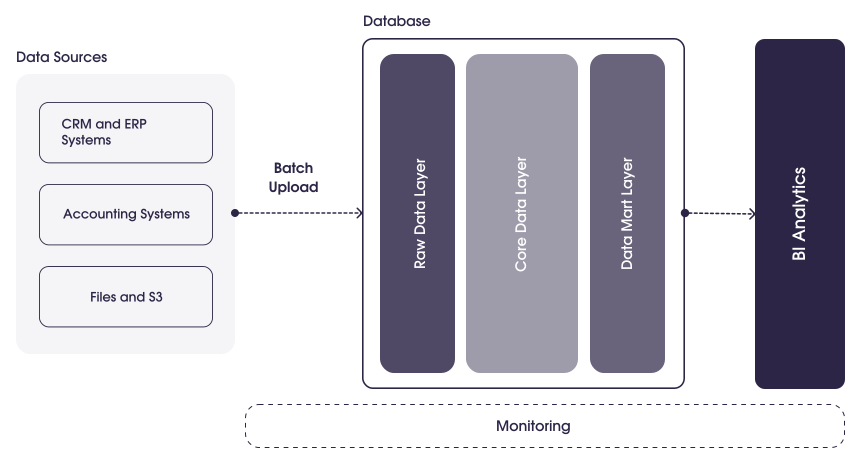
A simple architecture designed to work with 1–2 data sources, minimal infrastructure, and rapid setup of analytical reporting.
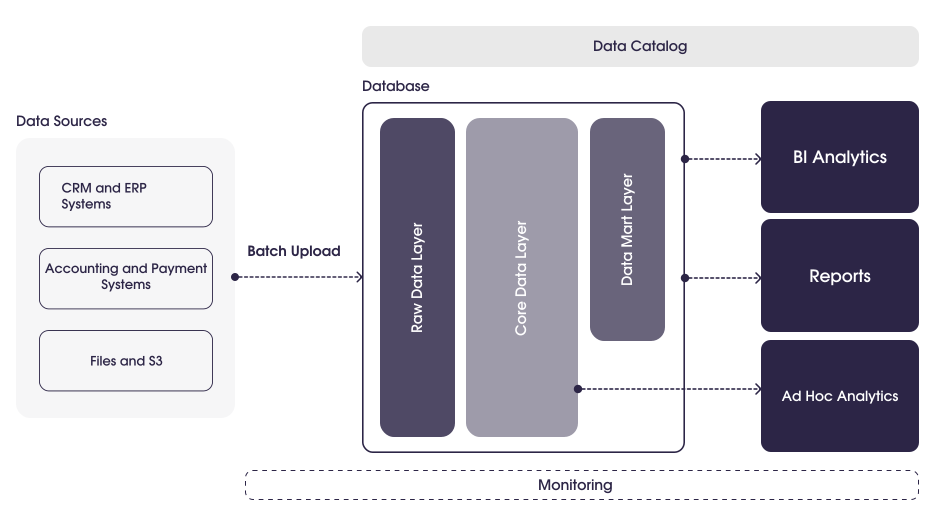
A mid-level architecture that integrates multiple data sources, including ERP and CRM systems, incorporates ETL processes, and builds a centralized data warehouse for analytics.
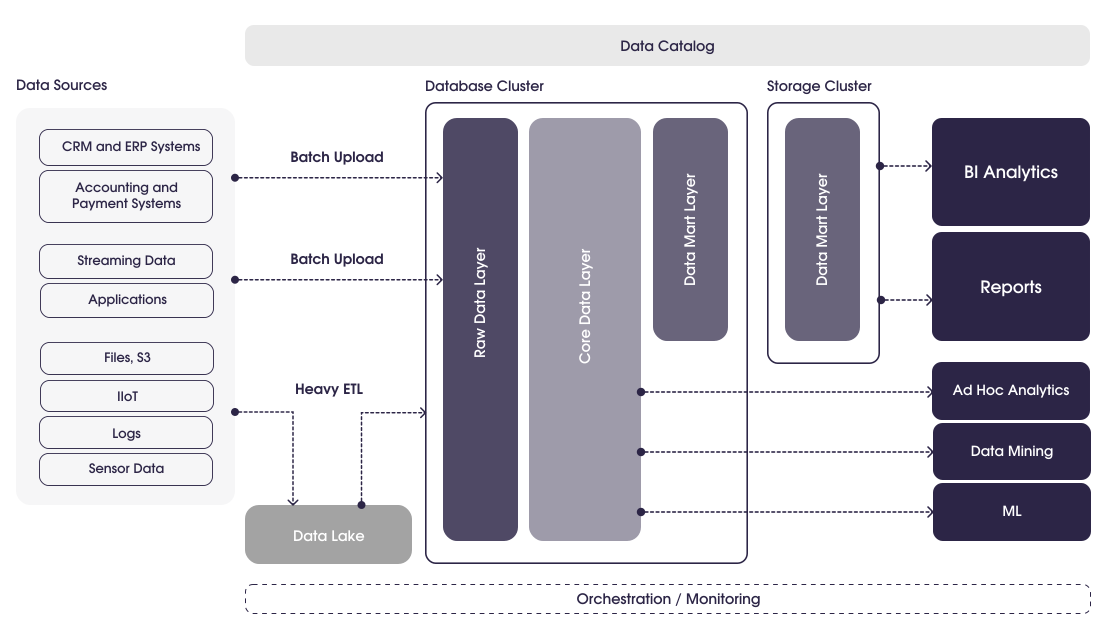
A multi-layered architecture supporting numerous distributed data sources, cloud services, IoT devices, and external APIs. Utilizes advanced ETL tools and analytical platforms to process large volumes of data in real time.
After building a reliable data warehouse (DWH), a company gains many opportunities for data processing, analysis, and visualization.
Data from the DWH can be used in various systems:
Data marts for company departments
• For the convenience of individual departments such as marketing, finance, or sales, data marts can be выделены from the central warehouse — small data segments configured for specific tasks. This helps employees access relevant information faster and work with it more efficiently.
Streaming and event analytics
• A DWH can also be integrated with stream analytics systems, which is especially relevant for companies operating in real time. This makes it possible to respond instantly to changes, events, and anomalies in business processes, optimizing management and operations.
Predictive analytics systems
• For companies focused on the future, data from a DWH can be used in predictive analytics systems. Such platforms, powered by machine learning and artificial intelligence, make it possible to build forecasts, assess risks, and make more accurate decisions based on deep data analysis.
Ready-made Excel reports
• Complex analytics is not always necessary — sometimes standard spreadsheets are enough. We can set up automatic Excel report generation so you can receive up-to-date data without having to upload it manually from the system.
Data visualization: real-time dashboards and reports
• Visualization is one of the key tools for understanding business processes. Integrating a DWH with BI platforms such as Power BI, Yandex DataLens, or Qlik makes it possible to build interactive dashboards and real-time reports that clearly show the dynamics of key indicators.
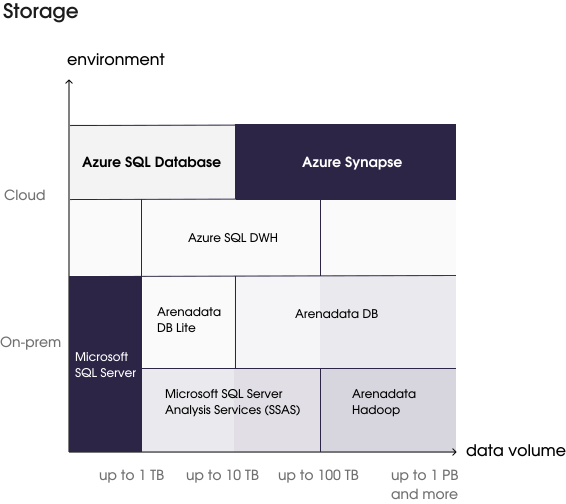
We can implement a data warehouse of any complexity tailored to your needs, whether it is an isolated environment or cloud infrastructure
DATA WAREHOUSE OF ANY COMPLEXITY
DWH DESIGN AND IMPLEMENTATION STAGES
Analysis of business requirements and current BI system
01
Data collection and integration from multiple sources
03
ETL process setup (Extract, Transform, Load)
04
System optimization and post-implementation support
05
Designing the data warehouse architecture
02
Implementing a data warehouse requires a strong focus on security and access control.
DATA PROTECTION AND ACCESS MANAGEMENT IN DWH
Data Encryption
We apply modern encryption methods to protect sensitive data both in transit and at rest.

Controlled Access
We configure role-based access and permission levels so each user can access only the data they need.

Activity Monitoring
All user actions and data operations are tracked to detect risks early and prevent security breaches.

Pricing is calculated individually based on your business задач, data volume, and integration complexity.
COST OF DWH DESIGN AND IMPLEMENTATION
Swipe right to see more
Real estate sales analysis: how BI helps optimize strategy
Implementing BI analytics makes it possible to track key sales indicators, identify the most profitable residential complexes and apartment types. The dashboard helps analyze deal structure, monitor dynamics, and make informed decisions to increase profitability.
Capabilities:
Results:
Comparison of sales volumes, deal dynamics, and income structure in the real estate sector
Analysis of the number and value of deals
Breakdown of sales by residential complex, building, and apartment type
Monitoring deal dynamics and statuses
Revenue and profit growth
Sales strategy optimization
Reduced deal closing time
Real estate sales analysis: how BI helps optimize strategy
Implementing BI analytics makes it possible to track key sales indicators, identify the most profitable residential complexes and apartment types. The dashboard helps analyze deal structure, monitor dynamics, and make informed decisions to increase profitability.
Capabilities:
Results:
Comparison of sales volumes, deal dynamics, and income structure in the real estate sector
Analysis of the number and value of deals
Breakdown of sales by residential complex, building, and apartment type
Monitoring deal dynamics and statuses
Revenue and profit growth
Sales strategy optimization
Reduced deal closing time
Marketing analysis: how BI helps improve ROI
Implementing BI analytics makes it possible to track key metrics across products and advertising channels. The dashboard compares the effectiveness of different traffic sources, helps identify growth opportunities, and redistribute budget for maximum profit.
Capabilities:
Results:
Comparison of profit, traffic, and conversions across products and advertising channels
Product analysis
Advertising ROI
Call dynamics
Conversion growth
Reduced marketing costs
Financial analytics in the banking sector:
how BI helps manage performance
how BI helps manage performance
Implementing BI analytics makes it possible to track key financial indicators, analyze deposit dynamics and the loan portfolio, and identify asset trends. The dashboard helps control risks, assess the structure of deposits, and support strategic decision-making.
Capabilities:
Results:
Monitoring key financial indicators, risk management, and asset trend analysis in the banking sector
Analysis of deposit dynamics, loan portfolio, and debt
Assessment of the structure of deposits and loans by category
Comparative analysis of financial indicators by period
Optimization of bank asset management
Improved efficiency of credit policy
Enhanced strategic planning
Raw material and finished goods inventory in tanks:
how BI helps control warehouse stock levels
how BI helps control warehouse stock levels
Implementing BI analytics makes it possible to track accurate data on raw material and finished goods inventory, analyze changes over time, and prevent shortages or excess accumulation.
Capabilities:
Results:
Raw material and finished goods inventory in tanks
Real-time inventory monitoring by resevoir tank
Visualization of changes in raw material and finished goods volumes
Control of resource allocation across resevoir tanks
Reduced risk of raw material shortages
Optimized inventory management
Improved planning and logistics efficiency
Raw material and finished goods inventory in tanks:
how BI helps control warehouse stock levels
how BI helps control warehouse stock levels
Implementing BI analytics makes it possible to track accurate data on raw material and finished goods inventory, analyze changes over time, and prevent shortages or excess accumulation.
Capabilities:
Results:
Raw material and finished goods inventory in tanks
Real-time inventory monitoring by resevoir tank
Visualization of changes in raw material and finished goods volumes
Control of resource allocation across resevoir tanks
Reduced risk of raw material shortages
Optimized inventory management
Improved planning and logistics efficiency
Real estate sales analysis: how BI helps optimize strategy
Implementing BI analytics makes it possible to track key sales indicators, identify the most profitable residential complexes and apartment types. The dashboard helps analyze deal structure, monitor dynamics, and make informed decisions to increase profitability.
Capabilities:
Results:
Comparison of sales volumes, deal dynamics, and income structure in the real estate sector
Analysis of the number and value of deals
Breakdown of sales by residential complex, building, and apartment type
Monitoring deal dynamics and statuses
Revenue and profit growth
Sales strategy optimization
Reduced deal closing time
Marketing analysis: how BI helps improve ROI
Implementing BI analytics makes it possible to track key metrics across products and advertising channels. The dashboard compares the effectiveness of different traffic sources, helps identify growth opportunities, and redistribute budget for maximum profit.
Capabilities:
Results:
Comparison of profit, traffic, and conversions across products and advertising channels
Product analysis
Advertising ROI
Call dynamics
Conversion growth
Reduced marketing costs
Financial analytics in the banking sector:
how BI helps manage performance
how BI helps manage performance
Implementing BI analytics makes it possible to track key financial indicators, analyze deposit dynamics and the loan portfolio, and identify asset trends. The dashboard helps control risks, assess the structure of deposits, and support strategic decision-making.
Capabilities:
Results:
Monitoring key financial indicators, risk management, and asset trend analysis in the banking sector
Analysis of deposit dynamics, loan portfolio, and debt
Assessment of the structure of deposits and loans by category
Comparative analysis of financial indicators by period
Optimization of bank asset management
Improved efficiency of credit policy
Enhanced strategic planning
Raw material and finished goods inventory in tanks:
how BI helps control warehouse stock levels
how BI helps control warehouse stock levels
Implementing BI analytics makes it possible to track accurate data on raw material and finished goods inventory, analyze changes over time, and prevent shortages or excess accumulation.
Capabilities:
Results:
Raw material and finished goods inventory in tanks
Real-time inventory monitoring by resevoir tank
Visualization of changes in raw material and finished goods volumes
Control of resource allocation across resevoir tanks
Reduced risk of raw material shortages
Optimized inventory management
Improved planning and logistics efficiency

FAQ
We understand that every data warehouse is unique, which is why we offer customized solutions — from architecture design to integration with your existing systems. Your goals are our guide.
Our experts use proven methodologies and modern tools to shorten project timelines while maintaining the highest quality standards.
We implement advanced encryption and access control practices to keep your data protected at every stage — from transmission to storage.
We know how to make your ETL processes as fast and stable as possible so data flows into the DWH without delays or errors.
We do more than implement a solution — we support you at every stage, from the first data load to optimization and scaling for new business needs.
DO YOU WANT A POWERFUL AND EFFECTIVE DATA WAREHOUSE FOR YOUR BUSINESS?
Contact us for a free consultation and find out how our solutions can help you consolidate data and improve analytics!
5
types of AI developed and implemented
6
industry awards, Microsoft Gold Partner status
700+
business analysts and executives trained
16
industries served
400+
projects implemented
670
billion KZT analyzed
670
billion KZT analyzed
10+
years of experience in big data and dynamic analytics
THE NUMBERS SPEAK FOR THEMSELVES

RELATED SERVICES
Optimize data storage and reduce costs with well-designed solutions for long-term retention
Optimization of data storage processes
Improve performance and save resources with optimized data storage
Backup systems for critical databases
Ensure seamless data integration and accelerate analytics with powerful Data Factory tools
Data Factory and data integration
Simplify the management of critical information and improve data quality for better decision-making.
Master Data Management (MDM)