


Data is the foundation of a modern company
Today, decisions are made based on information and knowledge derived from data. But for data to become useful information, it must be processed: cleaned, aggregated, and transformed.
Problems begin when the number of data sources grows.
A unified data bus is needed to ensure data accuracy, timeliness, and control over data processing.
A unified data bus is needed to ensure data accuracy, timeliness, and control over data processing.
Data integration through Data Factory allows you to:
BENEFITS OF DATA FACTORY
FOR BUSINESS
Improve data accuracy and consistency
Automate the processing of large volumes of data
Combine data from disconnected sources
Create a unified information space for analytics
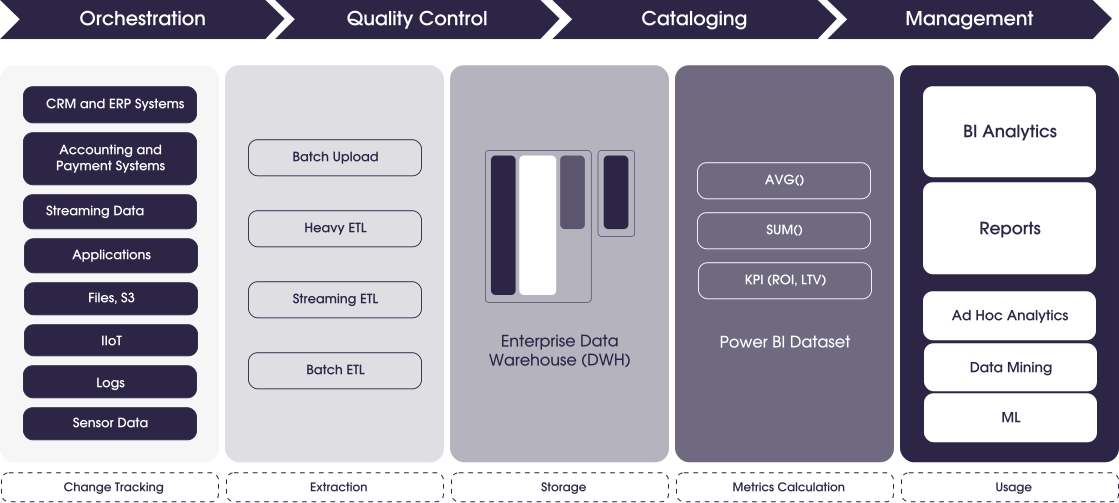
The diagram shows the key stages of data processing: ingestion, transformation, storage, computation, and data usage.
Each stage can be optimized with Data Factory
BIG DATA PIPELINE SCHEME
ASPEX has deep expertise in building “data processing factories.”
We provide a full data processing lifecycle:
Data orchestration
Simplifies the management of complex data processing workflows
Helps identify errors and audit results
Quality control
Integration
Ability to connect to MDM systems and data catalogs.
Data in the systems always reflects the current state of the business.
Reconciliation and timeliness
Data Factory provides a range of key capabilities:
CORE FUNCTIONS
AND CAPABILITIES OF DATA FACTORY
Flexible workflow configuration for real-time data processing

Process orchestration — management of complex data processing workflows
Data integration from various sources, including databases, cloud platforms, and APIs
ETL process automation (Extract, Transform, Load)
Data quality checks — error detection and control of data accuracy
Integration with external systems — support for MDM, CRM, ERP, and other business applications
IMPLEMENTATION STAGES
OF DATA FACTORY-BASED SOLUTIONS
Analysis of the current data infrastructure
01
Configuration of data pipelines and integrations
03
Deployment of auditing and monitoring systems
04
Ongoing support and optimization
05
Designing the Data Factory architecture
02
The implementation stages of Data Factory include:
At the design stage, we select the most effective data processing approach (ETL, ELT, Streaming, ZETL, Data Sharing) to best match your business needs.
This approach enables the creation of a reliable and flexible architecture, automates data collection, processing, and transformation, builds a unified data environment, and ensures fast access to data for analytics.
Data integration:
HOW DATA INTEGRATION
HELPS BUSINESS
Improves reporting quality
Eliminates information gaps between systems and departments
Speeds up decision-making
Data Factory:
Helps centralize data management
Ensures data consistency
Reduces information processing costs
WHAT DATA CAN BE
INTEGRATED VIA DATA FACTORY?

Using web scraping to collect information from web pages, especially from open data sources (e.g., catalogs, pricing).

Integration with 1C via OData for real-time data access or via ERP processes for automated data extraction, enabling flexible configuration for analytics and further processing.

Using Python scripts to automate data processing, transformation, and loading into storage or analytics systems.
Integration with relational and NoSQL databases through server connections and automated data extraction.
Support for REST and SOAP API integration for real-time interaction with external systems and flexible data exchange.
Extracting data from Excel documents and transforming it into formats suitable for analytics and integration.
Data Factory enables integration of SQL and NoSQL databases, files, IoT devices, and other sources, providing flexibility to work with diverse data types and prepare them for business analytics.
STAGES OF DATA INTEGRATION AND PROCESSING
To optimize data processing and ensure data availability, the following approaches are used:
ZETL (Zero ETL)
- A minimalist approach where data is connected directly between source systems and analytical platforms, without intermediate stages.
ELT (Extract, Load, Transform)
- Data is first loaded into the warehouse and then transformed, reducing the load on preliminary processing. Works especially well in cloud environments.
ETL (Extract, Transform, Load)
- A traditional approach where data is extracted, transformed, and loaded into a data warehouse. Used for systems that require strict processing and integration.
Data Sharing
- A modern approach that enables organizations to securely and efficiently share data without physical transfer. Used for collaborative analytics, reporting, and intercompany data integration.
Streaming
• Real-time data processing for applications with rapidly changing data, such as IoT and event streams.
Real-World Examples: How Data Integration Improves Business Performance
Swipe right to see more
Real estate sales analysis: how BI helps optimize strategy
Implementing BI analytics makes it possible to track key sales indicators, identify the most profitable residential complexes and apartment types. The dashboard helps analyze deal structure, monitor dynamics, and make informed decisions to increase profitability.
Capabilities:
Results:
Comparison of sales volumes, deal dynamics, and income structure in the real estate sector
Analysis of the number and value of deals
Breakdown of sales by residential complex, building, and apartment type
Monitoring deal dynamics and statuses
Revenue and profit growth
Sales strategy optimization
Reduced deal closing time
Real estate sales analysis: how BI helps optimize strategy
Implementing BI analytics makes it possible to track key sales indicators, identify the most profitable residential complexes and apartment types. The dashboard helps analyze deal structure, monitor dynamics, and make informed decisions to increase profitability.
Capabilities:
Results:
Comparison of sales volumes, deal dynamics, and income structure in the real estate sector
Analysis of the number and value of deals
Breakdown of sales by residential complex, building, and apartment type
Monitoring deal dynamics and statuses
Revenue and profit growth
Sales strategy optimization
Reduced deal closing time
Marketing analysis: how BI helps improve ROI
Implementing BI analytics makes it possible to track key metrics across products and advertising channels. The dashboard compares the effectiveness of different traffic sources, helps identify growth opportunities, and redistribute budget for maximum profit.
Capabilities:
Results:
Comparison of profit, traffic, and conversions across products and advertising channels
Product analysis
Advertising ROI
Call dynamics
Conversion growth
Reduced marketing costs
Financial analytics in the banking sector:
how BI helps manage performance
how BI helps manage performance
Implementing BI analytics makes it possible to track key financial indicators, analyze deposit dynamics and the loan portfolio, and identify asset trends. The dashboard helps control risks, assess the structure of deposits, and support strategic decision-making.
Capabilities:
Results:
Monitoring key financial indicators, risk management, and asset trend analysis in the banking sector
Analysis of deposit dynamics, loan portfolio, and debt
Assessment of the structure of deposits and loans by category
Comparative analysis of financial indicators by period
Optimization of bank asset management
Improved efficiency of credit policy
Enhanced strategic planning
Raw material and finished goods inventory in tanks:
how BI helps control warehouse stock levels
how BI helps control warehouse stock levels
Implementing BI analytics makes it possible to track accurate data on raw material and finished goods inventory, analyze changes over time, and prevent shortages or excess accumulation.
Capabilities:
Results:
Raw material and finished goods inventory in tanks
Real-time inventory monitoring by resevoir tank
Visualization of changes in raw material and finished goods volumes
Control of resource allocation across resevoir tanks
Reduced risk of raw material shortages
Optimized inventory management
Improved planning and logistics efficiency
Raw material and finished goods inventory in tanks:
how BI helps control warehouse stock levels
how BI helps control warehouse stock levels
Implementing BI analytics makes it possible to track accurate data on raw material and finished goods inventory, analyze changes over time, and prevent shortages or excess accumulation.
Capabilities:
Results:
Raw material and finished goods inventory in tanks
Real-time inventory monitoring by resevoir tank
Visualization of changes in raw material and finished goods volumes
Control of resource allocation across resevoir tanks
Reduced risk of raw material shortages
Optimized inventory management
Improved planning and logistics efficiency
Real estate sales analysis: how BI helps optimize strategy
Implementing BI analytics makes it possible to track key sales indicators, identify the most profitable residential complexes and apartment types. The dashboard helps analyze deal structure, monitor dynamics, and make informed decisions to increase profitability.
Capabilities:
Results:
Comparison of sales volumes, deal dynamics, and income structure in the real estate sector
Analysis of the number and value of deals
Breakdown of sales by residential complex, building, and apartment type
Monitoring deal dynamics and statuses
Revenue and profit growth
Sales strategy optimization
Reduced deal closing time
Marketing analysis: how BI helps improve ROI
Implementing BI analytics makes it possible to track key metrics across products and advertising channels. The dashboard compares the effectiveness of different traffic sources, helps identify growth opportunities, and redistribute budget for maximum profit.
Capabilities:
Results:
Comparison of profit, traffic, and conversions across products and advertising channels
Product analysis
Advertising ROI
Call dynamics
Conversion growth
Reduced marketing costs
Financial analytics in the banking sector:
how BI helps manage performance
how BI helps manage performance
Implementing BI analytics makes it possible to track key financial indicators, analyze deposit dynamics and the loan portfolio, and identify asset trends. The dashboard helps control risks, assess the structure of deposits, and support strategic decision-making.
Capabilities:
Results:
Monitoring key financial indicators, risk management, and asset trend analysis in the banking sector
Analysis of deposit dynamics, loan portfolio, and debt
Assessment of the structure of deposits and loans by category
Comparative analysis of financial indicators by period
Optimization of bank asset management
Improved efficiency of credit policy
Enhanced strategic planning
Raw material and finished goods inventory in tanks:
how BI helps control warehouse stock levels
how BI helps control warehouse stock levels
Implementing BI analytics makes it possible to track accurate data on raw material and finished goods inventory, analyze changes over time, and prevent shortages or excess accumulation.
Capabilities:
Results:
Raw material and finished goods inventory in tanks
Real-time inventory monitoring by resevoir tank
Visualization of changes in raw material and finished goods volumes
Control of resource allocation across resevoir tanks
Reduced risk of raw material shortages
Optimized inventory management
Improved planning and logistics efficiency
FAQ
It is a Microsoft cloud service for automating data collection, processing, and transfer. It helps businesses unify data from different sources and get analytics faster.
Through configurable pipelines: data is extracted, processed, and loaded into the target system. Dozens of connectors are supported, including SQL, APIs, files, and cloud services.
Almost any type: database tables, CSV/JSON/XML files, API data, log files, cloud storage, ERP systems, and CRM systems.
From 3 days to 3+ weeks, depending on the number of sources and the complexity of the logic.
Security is ensured through encryption, access control, auditing, compliance with standards such as GDPR and ISO, and environment isolation via VNet.
OPTIMIZE YOUR DATA INTEGRATION TODAY
Looking to automate data processing and improve analytics? Get in touch with us to learn how Data Factory can help optimize your business processes and centralize data management
5
types of AI developed and implemented
6
industry awards, Microsoft Gold Partner status
700+
business analysts and executives trained
16
industries served
400+
projects implemented
670
billion KZT analyzed
670
billion KZT analyzed
10+
years of experience in big data and dynamic analytics
THE NUMBERS SPEAK FOR THEMSELVES

RELATED SERVICES
Optimize data storage and reduce costs with well-designed solutions for long-term retention
Optimization of data storage processes
Improve performance and save resources with optimized data storage
Backup systems for critical databases
Build a reliable data warehouse optimized for your business processes to maximize analytical value and support strategic decision-making.
DWH design and implementation for your business
Simplify the management of critical information and improve data quality for better decision-making.
Master Data Management (MDM)